
If you're thinking about starting a food business in the Philippines, you don't necessarily need to open a full-sized restaurant.
A fast-food stall can be a much more practical way to get started.
With the right location, a focused menu, affordable pricing, and efficient operations, a small food stall can serve hundreds of customers without needing the space and complexity of a traditional restaurant.
And there is still plenty of demand for quick and affordable food in 2026. The Philippine foodservice industry continues to grow, with quick-service restaurants remaining one of its strongest segments. Recent industry reports also point to continued demand for affordable, convenient, grab-and-go food, while street stalls and kiosks continue to benefit from consumers looking for value and convenience.
Think about your usual day.
You might grab breakfast before work, buy lunch near the office, pick up fries after school, or order fried chicken for dinner because nobody feels like cooking.
That's exactly where the opportunity is.
But starting a fast-food stall isn't simply about selling popular food. You need to understand your customers, control your costs, choose your location carefully, and make sure your operation can handle busy periods.
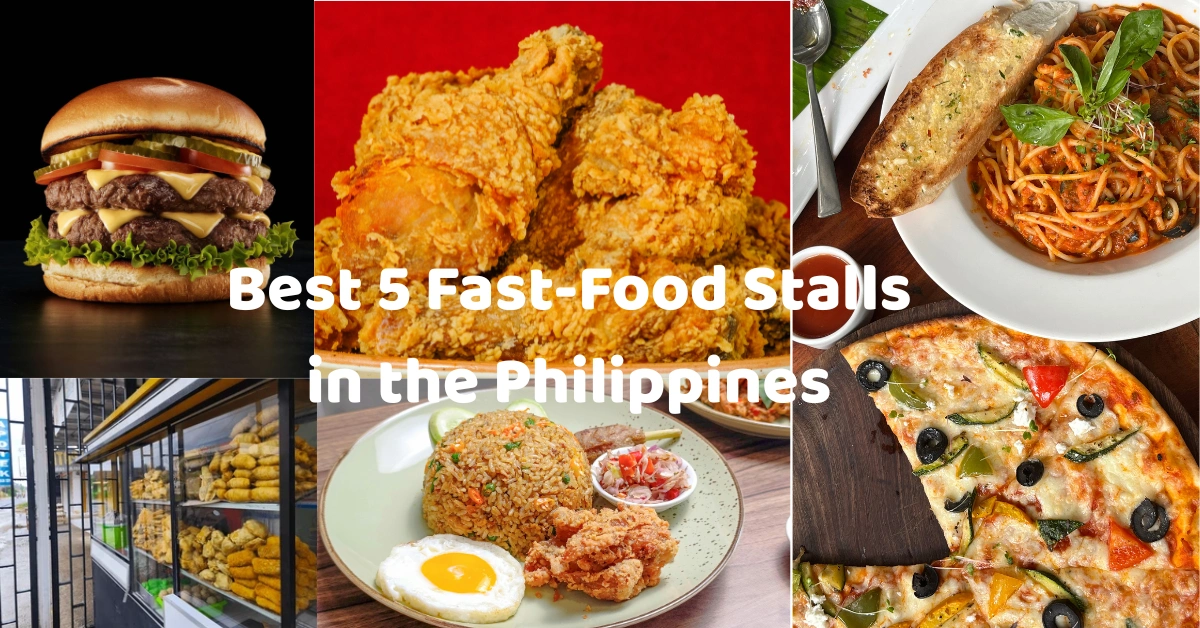
So, if you're looking for a fast-food business idea in 2026, here are five concepts worth considering in the Philippines.
Why Start a Fast-Food Stall in the Philippines in 2026?
Fast food is already deeply integrated into Filipino dining habits.
Industry data shows that limited-service and quick-service restaurants continue to account for a major portion of foodservice activity in the country. The appeal is straightforward: customers want food that is convenient, affordable, accessible, and quick.
A smaller stall can take advantage of the same behavior.
Instead of building a large restaurant, you can focus on one category and serve it efficiently.
For example:
- Burgers and fries
- Fried chicken
- Filipino rice meals
- Pizza and pasta
- Fried snacks
The street stall and kiosk category also continues to have room for independent businesses. Euromonitor's 2026 research describes stalls and kiosks as affordable, grab-and-go formats and notes that independent operators continue to dominate the category even as chains expand.
That makes the model particularly interesting for entrepreneurs who want to start small.
Learn more about what a food stall is.
What Makes a Successful Fast-Food Stall?
Before deciding what food to sell, think about the business behind the food.
Location Comes First
A great burger won't save a stall that nobody sees.
Your location should have enough potential customers and, ideally, customers who actually want the type of food you're selling.
Potential locations include:
- Schools
- Universities
- Office districts
- Malls
- Food courts
- Markets
- Transport terminals
- Food parks
- Commercial areas
- Residential communities
For example, a stall near a university might do well with affordable burgers, fries, chicken meals, or snacks.
Meanwhile, a stall near offices might have stronger demand for rice meals and lunch combinations.
Keep Your Menu Simple
One of the easiest mistakes to make is offering too many products.
You might think, "If I sell everything, I'll have something for everyone."
But a huge menu can make your business harder to manage.
More ingredients mean:
- More inventory
- More storage
- More preparation
- More potential waste
- More complicated staff training
- More opportunities for mistakes
Start with a few products and find out what customers actually want.
Speed Matters
Fast food should actually be fast.
Customers don't want to wait 20 minutes for a burger or a serving of fries, especially when they're buying during a lunch break.
Your kitchen layout, preparation process, ordering system, and staff responsibilities should all support quick service.
Don't Forget Food Cost
A product can be popular and still be unprofitable.
For example, if you sell a burger for ₱100 but your ingredients, packaging, labor, rent, and other expenses leave you with very little margin, high sales volume won't necessarily solve the problem.
Know your numbers before setting your price.
There are other Food Stall Businesses like Filipino Food Stalls, and Beverage Stalls.
Best 5 Fast-Food Stalls in the Philippines 2026
1. Burger and Fries Stall
Burgers are one of the easiest fast-food concepts to understand.
You have a basic formula:
Burger + fries + drink = complete meal.
That simplicity is part of the appeal.
You can start with a relatively small menu and then add variations as your business grows.
Popular Burger Ideas
Your menu could include:
- Classic burger
- Cheeseburger
- Double cheeseburger
- Chicken burger
- Bacon burger
- Mushroom burger
- Spicy burger
- Loaded fries
You could also create a signature burger that gives customers a reason to choose your brand.
For example, instead of simply selling another cheeseburger, you might develop a special sauce or Filipino-inspired flavor.
Think of things like:
- Sweet-style barbecue sauce
- Spicy Filipino sauce
- Garlic mayo
- Longganisa-inspired burger
- Adobo-inspired burger
You don't need to make the product complicated. Sometimes a small twist is enough.
Where Can a Burger Stall Work?
Consider:
- Schools
- Malls
- Food parks
- Offices
- Commercial areas
- Transport hubs
The biggest challenge is competition.
There are plenty of burger businesses already, so branding, taste, pricing, and consistency become important.
2. Fried Chicken Stall
If there is one food category that has enormous appeal in the Philippines, fried chicken is definitely near the top.
Filipinos love crispy chicken, and the product works for breakfast, lunch, dinner, snacks, and even late-night meals.
That gives a fried chicken stall plenty of opportunities.
Popular Fried Chicken Products
You could offer:
- Fried chicken with rice
- Chicken wings
- Chicken strips
- Chicken pops
- Spicy fried chicken
- Crispy chicken bites
You can also create different sauces or flavors.
For example:
- Original
- Spicy
- Garlic
- BBQ
- Sweet chili
- Cheese
Build Simple Combos
One of the easiest ways to increase the value of each order is to create meal combinations.
For example:
1 pc chicken + rice + drink
or
2 pc chicken + rice + fries
or
Chicken wings + fries + drink
Customers don't have to think too much about what to order, and you can make the pricing easier to understand.
Why Fried Chicken Can Work
Fried chicken has a broad customer base.
You aren't limited to one demographic.
Potential customers include:
- Students
- Office workers
- Families
- Commuters
- Local residents
However, quality control is extremely important.
Your chicken needs to be consistently crispy, properly cooked, flavorful, and served at the right temperature.
3. Filipino Fast-Food and Rice Meal Stall
If you want something deeply familiar to Filipino customers, consider a rice meal stall.
Rice meals are particularly attractive because they're filling and can be sold at different price points.
You don't have to create complicated dishes.
You could focus on familiar favorites.
Popular Rice Meal Ideas
For breakfast:
- Tapsilog
- Tocilog
- Longsilog
- Bangsilog
- Cornsilog
For lunch and dinner:
- Adobo
- Liempo
- Pork barbecue
- Chicken barbecue
- Fried chicken
- Fried pork
- Beef tapa
The advantage of this concept is that customers already understand the product.
They don't need an explanation of what tapsilog or barbecue rice is.
Why Rice Meals Can Be a Strong Business
Rice meals can appeal to people who want a proper meal rather than a snack.
This makes them especially useful near:
- Offices
- Schools
- Markets
- Terminals
- Industrial areas
- Residential communities
You can also operate during multiple meal periods.
Breakfast can bring in customers early in the day, while lunch and dinner can provide additional sales opportunities.
Keep Portions Consistent
If one customer gets a large serving of meat and another gets a much smaller serving for the same price, you'll eventually have problems.
Standardize your portions.
This helps with both customer satisfaction and food-cost control.
4. Pizza and Pasta Stall
Pizza and pasta might not be the first thing you think about when someone says "food stall," but they can work well in a smaller format.
The key is to avoid trying to operate like a full-service Italian restaurant.
Instead, focus on convenient portions.
Popular Menu Ideas
You could sell:
- Pizza slices
- Personal-size pizzas
- Spaghetti
- Carbonara
- Baked pasta
- Garlic bread
A pizza slice concept can be particularly convenient for customers who don't want to buy an entire pizza.
You could also offer:
Pizza + drink
or
Pasta + garlic bread + drink
Add Filipino-Inspired Flavors
This is another area where localization can help.
You don't necessarily have to stick to traditional pepperoni or four-cheese pizza.
You could experiment with flavors inspired by Filipino preferences.
For example:
- Ham and cheese
- Filipino-style sweet sauce
- Chicken barbecue pizza
- Longganisa pizza
- Bacon and egg
- Spicy local-inspired combinations
The important thing is to test what customers actually like before adding too many items.
Best Locations
Pizza and pasta stalls can work well in:
- Malls
- Food courts
- Food parks
- Schools
- Commercial centers
They're also naturally suited to sharing, which can be useful when serving groups.
5. Snack and Fried Food Stall
If your budget is more limited, a snack-focused stall may be worth considering.
Instead of selling full meals, you can focus on affordable food customers can eat while walking, commuting, studying, or hanging out.
Popular Snack Ideas
You could offer:
- French fries
- Chicken pops
- Fish balls
- Squid balls
- Kwek-kwek
- Calamares
- Cheese sticks
- Onion rings
- Fried dumplings
- Chicken skin
One of the biggest advantages is that many products can be sold in different portion sizes.
For example:
Small fries
Regular fries
Large fries
You can also offer different sauces.
Create Combos
Instead of selling everything separately, create bundles.
For example:
Fries + chicken pops + drink
or
Kwek-kwek + fish balls + drink
Bundles can make your menu easier to understand while potentially increasing the average transaction.
Where Can This Work?
Snack stalls can be particularly suitable near:
- Schools
- Markets
- Transport terminals
- Food parks
- Busy streets
- Community areas
The main challenge is controlling food quality and oil usage.
Comparison of the 5 Fast-Food Stall Ideas
| Fast-Food Stall | Startup Level | Target Market | Main Advantage |
| Burger & Fries | Medium | Students, workers, families | Easy to customize |
| Fried Chicken | Medium | General market | Broad customer appeal |
| Filipino Rice Meals | Low–Medium | Workers, students, commuters | Familiar and filling |
| Pizza & Pasta | Medium | Students, families, groups | Flexible menu |
| Snacks & Fried Food | Low–Medium | Students, commuters | Affordable and convenient |
These are general comparisons rather than fixed startup costs. Your actual investment can vary significantly depending on your location, rent, equipment, permits, menu, ingredients, branding, and stall size.
How Much Does It Cost to Start a Fast-Food Stall?
This is probably one of the first questions you'll ask when planning your business.
The honest answer is: it depends.
A small neighborhood food stall can have very different startup costs from a professionally built mall kiosk.
Stall or Kiosk
Rent can be one of your largest expenses.
You may need to budget for:
- Advance rent
- Security deposit
- Construction
- Signage
- Utilities
Always calculate your expected monthly operating costs before committing to a location.
Learn more about Self-Ordering Kiosk.
Cooking Equipment
Depending on your concept, you may need:
- Fryer
- Griller
- Stove
- Oven
- Refrigerator
- Freezer
- Rice cooker
- Food warmer
- Preparation tables
Don't automatically buy the most expensive equipment.
Choose equipment based on your actual expected volume.
Initial Inventory
Your first inventory may include:
- Meat
- Bread
- Rice
- Vegetables
- Cooking oil
- Sauces
- Seasonings
- Cheese
- Packaging
- Drinks
Keep your first inventory manageable.
You don't want to spend too much money on ingredients that might eventually go to waste.
Permits and Registration
Before opening, make sure you understand the registrations and permits applicable to your business and location, including local requirements and food sanitation requirements.
Branding and Marketing
Don't underestimate the importance of your stall's appearance.
Your signage, menu board, packaging, and overall presentation should make it easy for customers to understand what you sell.
How to Choose the Right Fast-Food Stall
Choosing the concept is one of the most important decisions you'll make.
Start With Your Budget
If your budget is limited, you may want to choose a concept that doesn't require expensive equipment.
A simple snack or Filipino rice meal concept could have a different equipment requirement from a pizza business.
Know Your Customers
Ask yourself:
Who is going to buy this food?
Students?
Office workers?
Families?
Commuters?
Local residents?
The answer should influence your menu and pricing.
Study Your Location
Spend time in the area before signing a lease.
Visit during:
- Morning
- Lunch
- Afternoon
- Evening
Count the foot traffic.
Look at what people are already buying.
Observe when nearby food stalls get busy.
This can tell you much more than simply looking at the location on a map.
Study Competitors
Don't just look at their food.
Look at:
- Prices
- Portions
- Service speed
- Packaging
- Promotions
- Customer volume
- Menu variety
Then ask yourself:
What can I do differently?
How a POS System Can Help a Fast-Food Stall
When you're starting out, it can be tempting to track everything manually.
Maybe you use a calculator, notebook, spreadsheet, or phone.
That can work when you're handling a small number of orders.
But imagine your stall gets extremely busy during lunch.
Orders are coming in from multiple customers.
One employee is taking orders.
Another is preparing food.
Another is handling payments.
That's when a proper POS system can make a major difference.
Faster Order Processing
A POS can help organize orders and payments, reducing manual work during rush periods.
Track Sales
Instead of simply counting cash at the end of the day, you can monitor your sales activity and identify patterns.
You can find out:
- Which products sell the most
- Which hours are busiest
- Which days perform best
- Which promotions work
Manage Inventory
Food businesses have a lot of moving parts.
You need to track ingredients such as meat, rice, bread, sauces, cooking oil, packaging, and more.
A POS with inventory management can help you monitor stock levels and reduce the risk of unexpected shortages.
Reduce Waste
Sales information can help you prepare more accurately.
If you know that your burger sales increase significantly every Friday, for example, you can plan your inventory accordingly.
Learn more about POS Providers in the Philippines.
Why Consider Divergent POS for a Fast-Food Stall?
As your business grows, you need more than just a way to accept payments.
You need to understand what's happening inside the business.
Divergent POS provides POS solutions for Philippine businesses that can help with sales, inventory, reporting, employee management, and other daily operations.
For a fast-food stall, this can be especially useful during busy periods when speed and accuracy matter.
Instead of guessing how your business is performing, you can use sales information to answer questions such as:
- What is our best-selling meal?
- What time do we get the most orders?
- Which products aren't selling?
- Which ingredients are running low?
- How much did we sell today?
- Which promotion performed best?
And if your goal is eventually to expand into two, three, or more locations, having an organized POS system from the beginning can make it easier to monitor your operations.
Tips for Growing a Fast-Food Stall in 2026
Create a Signature Product
Give customers something they associate with your brand.
It could be your burger sauce, fried chicken seasoning, barbecue marinade, or a unique snack combination.
Offer Value Meals
Filipino consumers often look for value.
A simple combination of a main dish, side, and drink can make your offer easier to understand.
Use Social Media
Food is naturally visual.
Post:
- New products
- Food photos
- Short videos
- Promotions
- Customer reviews
- Behind-the-scenes content
You don't need an expensive marketing campaign to get started.
Consistent, useful content can help people discover your business.
Make Service Fast
A hungry customer doesn't want to wait forever.
Organize your kitchen and ordering process so that employees know exactly what they need to do during peak periods.
Track Your Numbers
Monitor:
- Sales
- Food costs
- Labor
- Rent
- Utilities
- Waste
- Inventory
- Profit margins
Sales alone don't tell the whole story.
Common Mistakes to Avoid
Starting a fast-food stall can be exciting, but don't let the excitement cause you to skip the basics.
Here are some mistakes to watch out for:
Choosing a Location Without Research
Don't sign a lease simply because the rent looks affordable.
Offering Too Many Products
A smaller menu is often easier to manage.
Underpricing Your Food
Know your actual costs before deciding on your selling price.
Ignoring Food Waste
Expired or unsold ingredients directly affect profitability.
Providing Inconsistent Portions
Customers expect the same value every time they order.
Slow Service
Speed is part of the product when you're running a fast-food business.
Ignoring Customer Feedback
Your customers are constantly telling you what works and what doesn't.
Listen to them.
Expanding Too Quickly
One profitable stall is better than three poorly managed locations.
Make sure your first operation is stable before expanding.
Final Thoughts
The Philippines remains a strong market for convenient and affordable food, and 2026 continues to present opportunities for fast-food businesses. Quick-service restaurants remain a major part of the foodservice sector, while smaller stalls and kiosks continue to appeal to customers looking for value and convenience.
If you're considering starting a fast-food stall, you have plenty of concepts to choose from.
You could start with burgers and fries, fried chicken, Filipino rice meals, pizza and pasta, or affordable fried snacks.
But remember: the "best" fast-food stall isn't necessarily the one that's trending the most.
It's the one that fits your budget, your location, your customers, and your ability to operate it consistently.
Start with a focused menu.
Test your products.
Watch your costs.
Listen to your customers.
Track your sales.
Then improve.
And as your business grows, don't overlook the technology behind your operation. A reliable POS system can help you manage sales, inventory, reporting, and day-to-day operations more efficiently.
If you're planning to build a fast-food business in the Philippines, Divergent POS can help you create a more organized system for managing your growing food business.
Ready to improve your food business? Book a free demo with Divergent POS and see how a modern POS system can help you manage sales, inventory, and your growing business more efficiently.
