
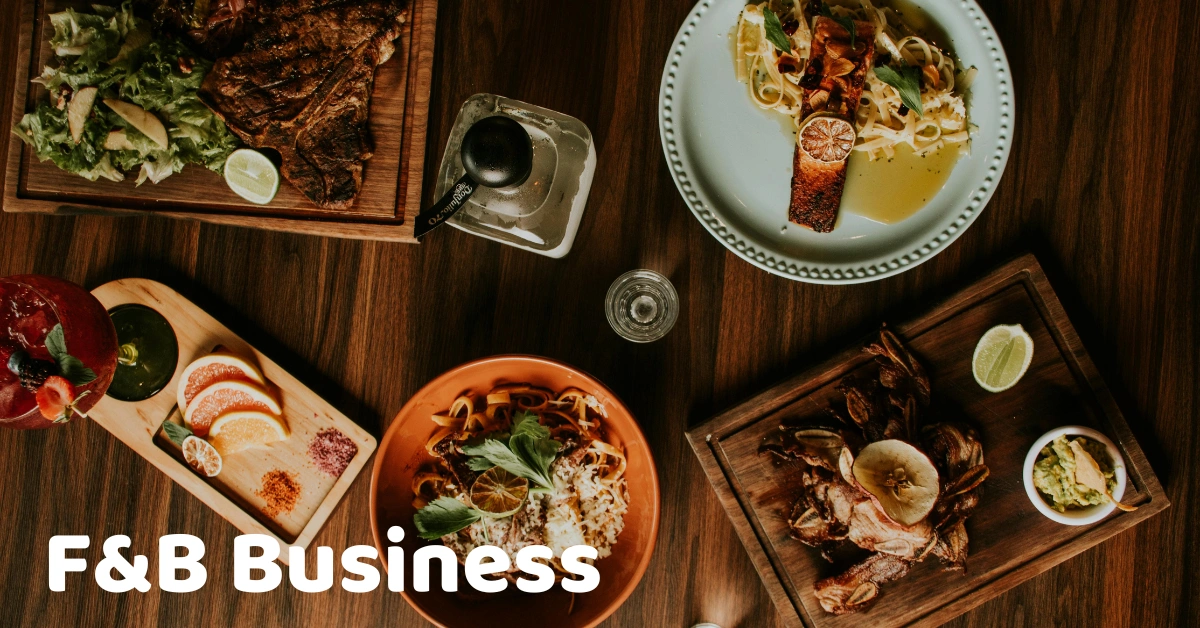
If you’ve ever thought about starting a restaurant, café, food stall, bakery, milk tea shop, or catering business, you’ve probably come across the term F&B business.
But what exactly does F&B mean?
F&B stands for Food and Beverage, and an F&B business is any business involved in preparing, selling, or serving food and drinks to customers. It is a broad industry that includes everything from small neighborhood eateries and food kiosks to large restaurants, hotels, cafés, catering companies, and food delivery businesses.
The F&B industry is one of the most visible and competitive business sectors in the Philippines. Filipinos love eating out, ordering food online, trying new cafés, and discovering new food concepts. At the same time, running an F&B business involves much more than simply serving good food.
You also need to manage inventory, employees, suppliers, orders, payments, expenses, customers, and daily sales.
That’s where good business processes and the right technology can make a big difference.
What Does F&B Mean?
F&B means Food and Beverage.
The term is commonly used to describe businesses and operations involved in producing, preparing, selling, and serving food and beverages.
For example, an F&B business could be:
- A restaurant
- Coffee shop
- Milk tea shop
- Bakery
- Food kiosk
- Fast-food store
- Bar
- Catering business
- Cloud kitchen
- Dessert shop
- Juice or smoothie shop
- Hotel restaurant
So when someone says they work in the “F&B industry,” they aren't necessarily talking about restaurants alone. F&B is a much broader category.
F&B vs. Restaurant Business
A restaurant is an F&B business, but not every F&B business is a restaurant.
Think of F&B as the larger category.
For example, a café belongs to the F&B industry, but its business model is different from a fine-dining restaurant. A food kiosk is also an F&B business, even though it may have only a few employees and a smaller menu.
This distinction is useful if you're planning to start a business because the type of F&B operation you choose will affect your costs, staffing, equipment, menu, location, and technology requirements.
Learn more about What is Restaurant POS.
What Is an F&B Business?
An F&B business is a business that earns revenue by selling food, beverages, or both to customers.
The basic idea sounds simple:
Buy ingredients → prepare products → sell to customers → collect payment → manage the business.
But behind that simple process is a lot of work.
A restaurant owner, for example, needs to know how much food was sold today, which menu items are popular, how much inventory remains, which ingredients need to be reordered, how much employees worked, and whether the business actually made money.
This is why running an F&B business requires both customer-focused service and strong operational management.
A delicious menu might bring customers through the door, but efficient operations help keep the business profitable.
Types of F&B Businesses
There are many different F&B business models. Choosing the right one often depends on your budget, target market, location, skills, and business goals.
Restaurants
Restaurants are one of the most common examples of F&B businesses.
They can include:
- Fast-food restaurants
- Casual dining restaurants
- Family restaurants
- Fine-dining restaurants
- Specialty restaurants
Restaurants typically have more complex operations because they may need to manage table orders, kitchen tickets, reservations, delivery orders, takeout orders, and multiple payment methods.
Learn more about What is Restaurant POS.
Cafés and Coffee Shops
Cafés have become a popular business concept, especially in areas with offices, schools, residential communities, and shopping centers.
A café might sell:
- Coffee
- Tea
- Milk tea
- Pastries
- Sandwiches
- Desserts
- Pasta
- Snacks
Some cafés also combine food service with coworking spaces, study areas, or lifestyle concepts.
Food Stalls and Kiosks
Not every F&B business needs a large restaurant space.
Food stalls and kiosks are often smaller operations that specialize in a limited menu. They can be found in malls, food courts, markets, transport areas, and commercial establishments.
Because the operation is usually smaller, speed and efficiency are especially important.
When you have a small team handling dozens of customers during lunch or dinner rush, even a few unnecessary steps can slow everything down.
Learn more about Food Kiosk System in the Philippines.
Bakeries and Pastry Shops
Bakeries sell products such as:
- Bread
- Cakes
- Pastries
- Cookies
- Donuts
- Other baked goods
Some bakeries operate as retail stores, while others accept customized orders for birthdays, weddings, corporate events, and other occasions.
Bars and Beverage Businesses
F&B also includes businesses that primarily sell beverages.
Examples include:
- Juice shops
- Smoothie shops
- Milk tea stores
- Bars
- Specialty beverage shops
These businesses may have fewer food items but can still require detailed inventory and sales tracking.
Catering Businesses
Catering businesses prepare and provide food for events such as:
- Weddings
- Birthdays
- Corporate events
- Seminars
- Parties
- Private gatherings
Unlike a traditional restaurant, a catering business may handle large orders for specific dates and locations, making scheduling, purchasing, preparation, and delivery particularly important.
Cloud Kitchens and Food Delivery Businesses
The rise of online ordering has also created new F&B models.
A cloud kitchen may operate without a traditional dine-in area. Instead, its primary focus is preparing food for delivery and takeaway orders.
This can reduce some location-related costs, but it introduces other challenges, such as managing online orders, delivery platforms, packaging, and preparation times.
How Does an F&B Business Work?
Although every business is different, most F&B businesses have several basic processes.
1. Purchasing and Inventory
The business needs ingredients and supplies to operate.
This could include:
- Meat
- Vegetables
- Rice
- Cooking oil
- Coffee beans
- Milk
- Syrups
- Packaging
- Cleaning supplies
Inventory management is particularly important in F&B because many ingredients are perishable.
Buying too much can result in spoilage and waste. Buying too little can lead to stockouts and disappointed customers.
2. Food Preparation
After purchasing ingredients, the business needs to turn them into products customers are willing to buy.
This requires consistency.
Customers expect their favorite meal or drink to taste similar every time they order it. Portion control, recipes, preparation procedures, and employee training can all contribute to that consistency.
3. Taking Orders
Orders can come from different channels.
For example:
- Counter orders
- Table orders
- QR ordering
- Phone orders
- Website orders
- Social media orders
- Food delivery platforms
As an F&B business grows, managing several ordering channels manually can become difficult.
4. Payment and Checkout
Once an order is completed, the business needs to process payment and record the transaction.
Customers may pay using:
- Cash
- Credit or debit cards
- E-wallets
- Other digital payment methods
A reliable checkout process should be quick, accurate, and easy for both customers and employees.
5. Reporting and Business Management
At the end of the day, the owner needs more than a cash total.
You may want to know:
- How much did we sell?
- What were our best-selling products?
- Which products are not selling?
- How much inventory was used?
- How did today's sales compare with yesterday?
- Which employees handled the most transactions?
- Which branch performed better?
These insights help business owners make better decisions.
Common Challenges of Running an F&B Business
Starting an F&B business can be exciting, but it also comes with challenges.
Rising Food Costs
Ingredient prices can change frequently.
If your food costs increase but your menu prices stay the same, your profit margin can become smaller.
This makes proper costing and regular price reviews important.
Food Waste
Food waste can quietly eat into your profits.
Ingredients can expire, portions can be inconsistent, or products may not sell as expected.
Tracking inventory can help business owners identify where waste is happening.
Employee Management
Employees are a major part of any F&B operation.
Owners may need to manage:
- Attendance
- Schedules
- Shifts
- Training
- Performance
- Responsibilities
During busy periods, having enough trained staff can make a huge difference in customer experience.
Long Waiting Times
Customers generally don't want to wait longer than necessary.
Slow order processing, communication problems between the cashier and kitchen, or manual processes can contribute to delays.
For busy restaurants, improving the flow from order → kitchen → preparation → payment → serving can make operations much smoother.
Competition
The F&B industry is highly competitive.
A new café can open just a few streets away. A competitor may offer lower prices, better promotions, faster delivery, or a more attractive customer experience.
This is why businesses need to continuously understand their customers and monitor their performance.
What Makes an F&B Business Successful?
Good food is important, but it isn't the only factor.
Quality Products
Customers come back when they know they can expect good quality.
Consistency is particularly important. Your best-selling meal shouldn't taste great today and completely different next week.
Excellent Customer Service
Friendly staff, accurate orders, fast service, and a smooth checkout experience can encourage customers to return.
Sometimes, the difference between a one-time customer and a loyal customer is simply how easy and pleasant the experience was.
Proper Pricing
Your prices need to make sense for both customers and the business.
You need to consider:
- Ingredient costs
- Labor
- Rent
- Utilities
- Packaging
- Delivery
- Marketing
- Other operating expenses
Selling a lot doesn't necessarily mean you're profitable if your costs are too high.
Strong Marketing
Social media has become an important marketing channel for many F&B businesses.
Businesses can promote:
- New menu items
- Discounts
- Seasonal products
- Events
- Loyalty programs
- Customer reviews
- Special offers
A strong online presence can help a small F&B business compete with larger brands.
Why Technology Matters in F&B
Technology can help simplify many repetitive tasks involved in running an F&B business.
Instead of recording every transaction manually, a modern POS system can centralize sales, inventory, reporting, and other business information.
How a POS System Helps an F&B Business
A POS system can help with:
- Faster order processing
- Sales tracking
- Inventory management
- Menu management
- Employee management
- Sales reports
- Customer management
- Payment processing
- Multi-location management
- Kitchen operations
For restaurants, a Kitchen Display System (KDS) can also help organize orders and improve communication between the front-of-house and kitchen teams.
A good POS system isn't just a digital cash register. It can become a central part of the business's daily operations.
How Divergent POS Supports F&B Businesses
For businesses in the Philippines, choosing a POS system that understands local business needs can be especially important.
Divergent POS provides POS solutions designed for different types of businesses, including restaurants, cafés, and other F&B operations.
Depending on the business setup, features can include sales management, inventory management, reporting and analytics, employee management, multi-location management, payment support, kitchen display capabilities, and back-office management.
For an F&B owner, the goal isn't simply to have another piece of software. The goal is to make everyday operations easier and give the owner better visibility into what's happening in the business.
For example, instead of manually checking several notebooks or spreadsheets to understand sales and inventory, centralized information can make it easier to monitor business performance.
If your business has multiple branches, having a system that brings information together can also make management much more convenient.
How to Start an F&B Business in the Philippines
If you're thinking about starting an F&B business, don't feel like you need to figure everything out at once.
Start with the basics.
Choose Your Business Concept
Decide what you want to sell and who you want to serve.
Will it be a:
- Café?
- Restaurant?
- Food kiosk?
- Bakery?
- Milk tea shop?
- Catering business?
- Cloud kitchen?
Your concept will influence nearly every other business decision.
Research Your Market
Look at your target customers and competitors.
Ask questions such as:
- Who are my customers?
- What do they usually buy?
- How much are they willing to spend?
- Who are my competitors?
- What can I offer that is different?
Calculate Your Budget
Don't focus only on the cost of opening.
You also need enough working capital to cover your early operating expenses.
Consider rent, equipment, ingredients, salaries, permits, utilities, marketing, packaging, and technology.
Set Up Your Operations
Before opening, establish your procedures for:
- Purchasing
- Inventory
- Food preparation
- Ordering
- Payment
- Cleaning
- Customer service
- Reporting
The more organized your processes are from the beginning, the easier it can be to scale later.
Set Up a Reliable POS System
A POS system can help you manage transactions while giving you useful information about your business.
For an F&B business, look for features that match your actual operation rather than simply choosing a system because it has the longest feature list.
A small café may have different requirements from a restaurant with multiple branches and a large kitchen.
One of the Reliable and Affordable POS in the Philippines is Divergent POS.
Final Thoughts
So, what is an F&B business?
Simply put, an F&B business is a business that sells or serves food, beverages, or both. It covers a wide range of businesses, including restaurants, cafés, bakeries, food stalls, kiosks, catering companies, bars, and delivery-focused businesses.
But running an F&B business successfully requires more than creating a good menu.
You need to manage inventory, employees, suppliers, orders, payments, customers, expenses, and sales. As the business grows, doing everything manually can become increasingly difficult.
That's why efficient processes and the right technology matter.
A reliable POS system can help bring important parts of the operation together, making it easier to track sales, manage inventory, monitor performance, and keep daily operations organized.
If you're planning to start an F&B business or looking for a better way to manage your existing restaurant, café, or food business, Divergent POS can help you explore a solution suited to your operations.
Book a free demo with Divergent POS and discover how a modern POS system can help simplify your F&B business.
